

 Implementation and Evaluation Plan
Previous
Workforce


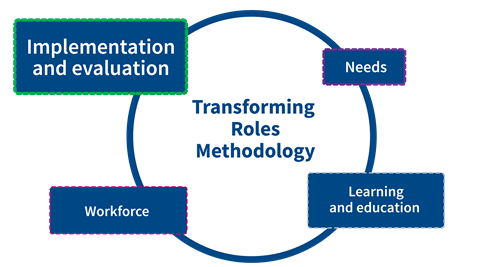
| Implementation and evaluation | Outputs | Tools and Templates |
|
Evaluate & review |
Considering:
|
Impact evaluation Measuring and Demonstrating Impact for Advanced Practice AHPs.
|
|
Impact evaluation |
|
Change management Scottish Approach to Change – Healthcare Improvement Scotland |
|
Change Management
|
|
Creating improvement Skills Max Toolkit -Step 3 (link once on site) |
|
Governance
|
|
AP Governance and maturity matrix (HEE) |
|
Financial and resource planning
|
|
Financial modelling (WrapT tool) Workforce Planning and Capacity Tool Writing business cases that get traction (video) Video transcript (doc) |
|
Return on investment
|
|
Return on Investment Return on investment for physiotherapy in the UK | The Chartered Society of Physiotherapy |
 |
Learn more about Financial modelling and building a business case in this short video. Watch the video (between 38.53-43.44) or download the video transcript (doc) |
 |
Watch this video to learn more about implementation and evaluation stages of Transforming Roles. Watch the video (between 40.44 - 44.15) or download the video transcript (doc) |
|
|
Watch this video around measuring and demonstrating impact for advanced practice AHPs Review these resources (link to be added) to learn more about measuring and demonstrating impact |
 |
Consider the information below and using the templates provided, map out your team or service area and add the relevant findings to your workforce plan.
There are many aspects of consider including: Funding Change: Planning for Delivery and Impact A strong financial plan gives the NHS the stability to deliver safe, sustainable services within tight resources. It helps organisations anticipate, not react to workforce, activity and cost pressures, enabling informed decisions on investment, redesign and future skill‑mix. Effective forecasting lets leaders model scenarios such as demographic change, demand growth, retirements and productivity, ensuring resources match clinical priorities and long‑term goals. By understanding future costs, capacity and risks, the NHS can protect service quality, support workforce transformation and build a financially resilient system that adapts to changing population needs. Financial modelling can include:
|
Seek support from your organisation by making connections with local workforce, finance and corporate planning teams.
Together, these stakeholders create an integrated, evidence-based plan that balances clinical need, financial sustainability, and strategic direction for the organisation.
The financial information collected should be used to build a clear case for change, for example by developing a business case, SBAR or options appraisal that sets out the problem, costs, benefits, risks and recommended solution. This helps decision‑makers understand the value, affordability and impact of the proposed change and supports timely, informed approval
Governance
The NHS Advanced Practice Governance and Maturity Tool supports organisations to assess how effectively advanced practice roles are implemented. It helps identify strengths, gaps and priorities across governance, leadership and workforce planning, supporting safe, consistent and sustainable development of advanced practice roles across services.