

Resources and Tools: Getting Started

02

A range of resources including a workshop and case studies are available with guidance to help you plan your learning.  

To start your Balanced System® introductory learning journey, watch the Balanced System® workshop video and review the slides 

(Insert video here)

Download video transcript (doc)

Download the workshop presentation slides (pdf)

This workshop video explores transformational change using the Balanced System® outcomes framework. This includes:

  • An overview of the Balanced System® including philosophy, outcomes framework, core delivery principles, and delivery model.
  • Real‑world application of the Balanced System® Case studies demonstrate how Allied Health Professionals (AHPs) and system partners—including Speech and Language Therapists (SLTs), Occupational Therapists (OTs), Physiotherapists (PTs), and education colleagues have used the Balanced System® framework to understand, influence and improve service delivery and outcomes for service users.

The case studies show how the Balanced System® has been applied to better understand and transform service provision across a range of settings, including work with children and young people and people living with dementia.

  • Reflection and appraisal opportunity - how could the Balanced System® approach benefit your own population or practice areas?

How to start to consider the Balanced System® approach for your area/system/population
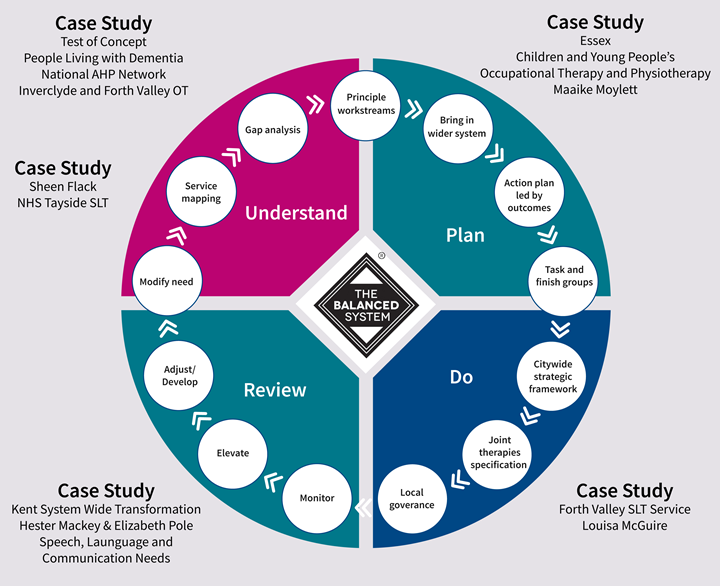
  • The Balanced System® has a structured approach, with understand, plan, do and review phases.
  • The case studies in the video above illustrate different stages of the cycle shown in the diagram below.


Start thinking around an outcomes/impact based approach

  • Use the tools (Free tools : The Balanced System) to start your thinking journey around how to take an outcomes/impact-based approach, working across your local system, for the population you serve.

Understand phase

Start thinking around an outcomes-based approach:

  • Use the tools to start your thinking journey around how to take an outcomes-based approach, working across your local system, for the population you serve.
Consider:
  • What support is available for the population you work with across the whole system (e.g. information, digital tools, signposting, charities and community support?)
  • How accessible is this support and who is using it - particularly while waiting for services?
  • What are the needs of the person/service user, and how can services best meet those needs?
  • How do we keep the person at the centre of those decisions and service design?
  • How do we measure impact from the person's perspective - such as functional outcomes and whether needs have been met? Do we ask users if we have met their needs? Impact should consider multiple measures, including quality, reach and accessibility, rather than a single indicator.
  • Allied Health Professionals (AHPs) using the Balanced System® outcomes framework, working out with children and young peoples services, are developing, you might be leading the way.
illustration of paper cups connected by string, symbolising two-way communication
Collaboration:

The tools take a whole population-based approach

  • Connect with colleagues across your local NHS Board/area who work with the same population e.g. SLT colleagues supporting children and young people across schools, child and mental health services (CAMHS), learning disability services etc
  • Identify AHPs from the same professional or geographical area, who could work together to complete the tools collectively.
  • Consider what support or influence may be needed locally to enable this approach in your area.
illustration of paper cups connected by string, symbolising two-way communication
Reflect:

Reflect on your learning from the resources and tools reviewed or completed

  • What aspects of the Balance System approach have been most helpful?
  • What difference has engaging with these resources made to your understanding or thinking so far?
  • How has engaging with these resources changed the way you think about your service, system or population?
  • How can this learning be applied in your own area or population you work with?
  • What next steps or actions, are realistic and achievable, to take forward within your current context?  

Action planning and next step

Use the action plan document to help identify key potential outcomes and next steps

Balance System® action plan

Review actions plans developed by Allied Health Professionals (AHPs) from different professions who attended the Balance System® workshop (see video above)

Identify any ideas, approaches or learning that could inform or strengthen your own action plan within your local context.

Examples of action plans include:


Balance System website and resources: