

Previous
Introduction and overview


Establish scope, objectives, and key stakeholders
|
Checklist Purpose
Scope
Ownership
|
Public Services Delivery Scotland and Skills for Health (the providers of Six Steps® training) have jointly developed webinars and resources that introduce the Six Steps® methodology, explain each step in detail, and show how to apply to workforce and service challenges.
|
To start—watch the Six Steps® introduction and Step 1 video below, and review the Six Steps® slides in the Accompanying resources section further down this page. |
Download video transcript (doc)
Six Steps introduction slides and step one slides
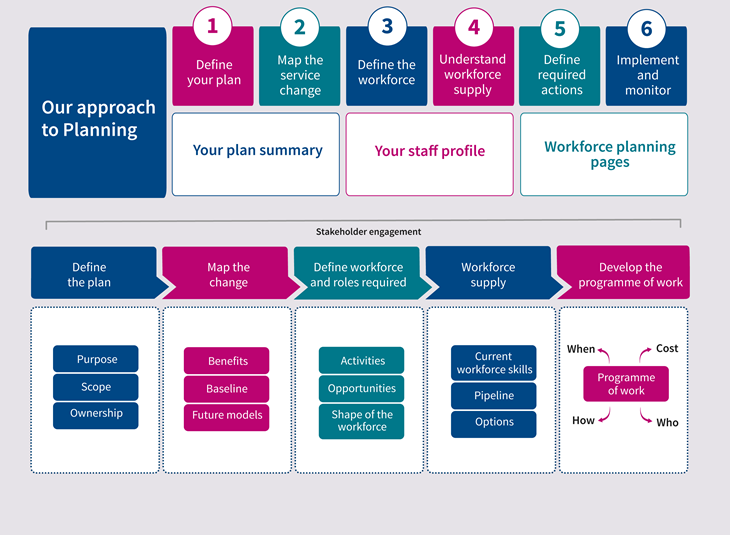
Consider the below resources to help support you.
  |
View:
|
 |
Decide:
|
Complete the Skills for Health workbook for Step 1: (pages 7-9) applying the questions to your AHP context/area/service challenge.
OR Complete the Six Steps® toolkit - start by completing Step 1, applying the questions to your AHP context/area/service challenge.
Aim: To define a clear vision for the NHS Greater Glasgow and Clyde orthotic service workforce by assessing current staffing levels against existing demand, and analysing service data, to identify future workforce requirements.
Download video transcript (doc)
Access the completed Six Steps® workbook
Further information and resources used for this case study can be found on the In action: Six Steps® case studies page.
Example of a completed toolkit:
Workforce planning toolkit WFP Toolkit.xlsx for NHS Scotland (adapted from Health Education and Improvement Wales (HEIW) with permission)
 |
Review other relevant sections of this website: |
 |
Decide if other resources and tools may be helpful:
|
 |
Consider if other resources and tools may be helpful: |