

 Service Specification
 Service needs analysis
Previous
Introduction and overview


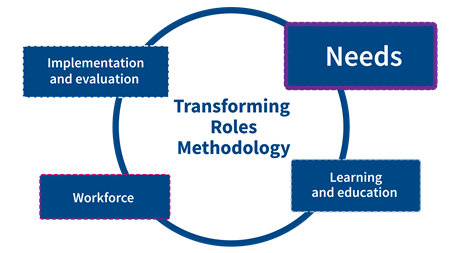
| Needs | Outputs | Resources, tools and templates |
|
Service needs Population needs Service user needs |
|
|
|
Drivers for change e.g. strategy, data, evidence |
Service user needs and journey Clarify patient journey – Skills Max Toolkit and Six Steps® Step 1 and examples |
|
|
Scope and purpose of service/team/role |
Population needs Data sources Data sources links table.docx Purpose, scope and drivers |
|
|
To hear a national perspective watch Dr Mark Cooper shares the history of TR Methodology and discusses Service Needs and Drivers. Watch the video. Download the video transcript (doc) |
|
|
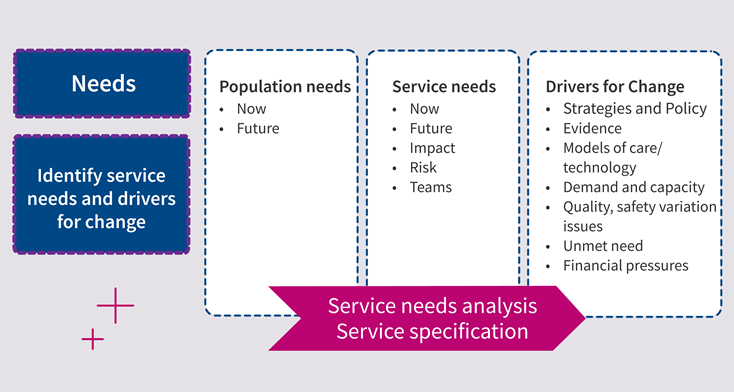
To understand Transforming Roles Needs as a methodology watch Sarah Florida James guides you through the steps from identifying needs using workforce analysis, with a team level example from Jacqueline Walker. Watch the video. Download the video transcript (doc) To begin, watch the video from Jacqueline Walker, who shares her journey in scoping the growing maternal diabetes health needs. Watch the video or download the video transcript (doc). Supporting slides are also provided to help break down each stage of the learning. |
|
|
Consider the information and diagrams (above), and the guidance (below), to scope out NEEDS for your team or service area. |
Understanding population data is essential for designing AHP services that meet current and future needs. It helps anticipate demand, address inequalities, and tailor services to local populations. By using insights on demographics, disease prevalence, and service use, AHPs can plan the right workforce, skill mix, and models of care—ensuring services are proactive, equitable, sustainable, and deliver maximum impact
What information is useful to consider:
Key links below with full details in the document above:
Workforce data
Population Data
Local data
Other resources on this website
 |
To begin, watch the video from Nikki Munro, NHS Greater Glasgow & Clyde who shares her journey in developing a service specification for adult orthotic services. | Watch the video Download the transcript (doc) Supporting slides are also provided to help break down each stage of the learning. |
 |
Consider the information below and using the templates provided, map out your team or service area. |
|
A service specification is a formally agreed document that defines what a service delivers, for whom, and to what standard. It sets out the purpose, scope, outcomes, activity levels, quality requirements, governance, and performance measures, providing a clear, evidence-based contract between commissioners and providers and a benchmark for assurance, improvement, and accountability. Used alongside a workforce plan, the service specification functions as a service needs analysis by translating required activity and outcomes into the skills, roles, capacity, and capabilities needed to deliver the service safely and sustainably, ensuring workforce supply is explicitly aligned to population need and service demand.
|
Consider what you have learned so far from each of the videos |
|
Consider the information below and using the templates provided, map out your team or service area and add the relevant findings to your service specification. You may also find the Six Steps® –Step 2 Map the service change helpful. |
National Strategy and Policy services must understand population need, financial and governance needs, inequalities, trends and demand. A robust needs analysis must align with national policy such as:
|
What does the evidence say? It is important to draw on robust evidence‑based research and published capability frameworks when considering Transforming roles methodology. This includes national and professional guidance, population health evidence, service evaluations, and research demonstrating the effectiveness, safety and outcomes of new or extended roles. Published capability and competence frameworks help define role scope, governance, education and supervision requirements, ensuring redesigned roles are credible, sustainable and aligned to professional standards while meeting current and future service needs.
|
Resources and Templates
Stakeholders and Engagement
How do I identify my Stakeholders and plan engagement?
Stakeholder Analysis is a way of identifying, prioritising and understanding your stakeholders.
Resources