

Introduction and overview

01

Six Steps® is a structured workforce planning approach to help services become more efficient, and future‑ready. It provides a clear, step‑by‑step method for understanding workforce needs and planning effectively.
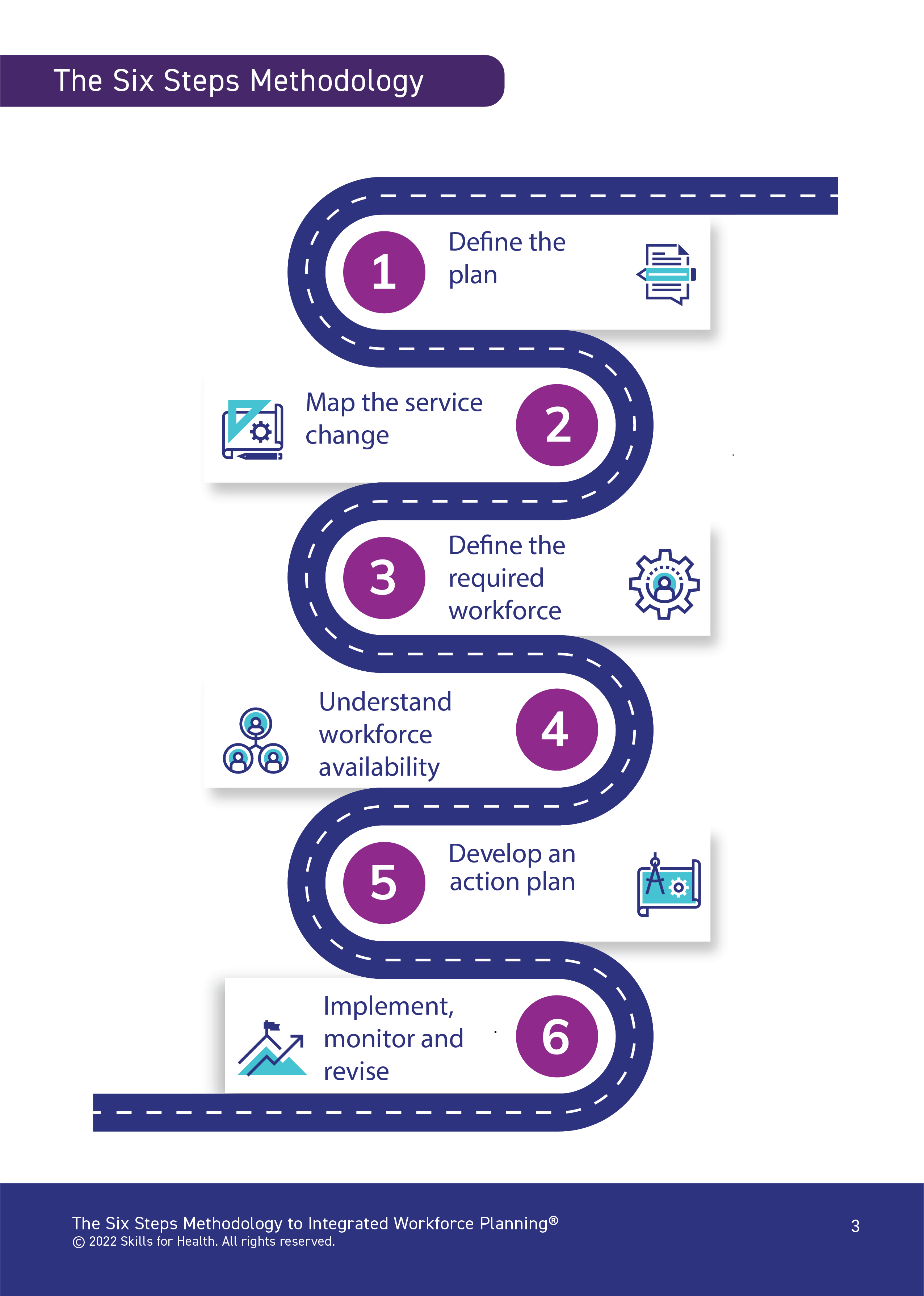
Why is Six Steps® used? and how is it helpful for me?

  • Helps identify and address workforce and service challenges enabling the development of practical solutions e.g. business cases, development of workforce plans, service/team redesign or wider workforce transformation.
  • Helps identify gaps between current and future workforce needs.
  • Is scalable and adaptable: works for teams, services, directorates, or whole‑system planning.


Who

Intended users:

  • AHPs, other healthcare professionals, workforce planners, service leads, managers, Human Resources and workforce lead(s), including those new to workforce planning seeking to develop their skills.
How?

Getting started and resources: 

  • The Six Steps® resources introduce the methodology, explain each step in detail, and show how to apply to workforce and service challenges.
  • Follow the learner journey to apply the methodology step by step, supported by webinars, workbooks, toolkits, templates, and case studies (see section below)
  • By completing the Six Steps® workbook or the Six Steps toolkit you will have a workforce plan framework. Information from this can be used for a workforce plan to support service re-design or transformation.
Resources
  • Cost - Six Steps® is a registered approach, Public Services Delivery Scotland and Skills for Health (the providers of Six Steps® training) have collaborated to develop freely accessible resources available on this website.
Timeframes and capacity
  • Vary dependent on the scale and scope of the work.
  • Case studies illustrate timelines, engagement and activity required for both team‑level and service‑level change.

How to use the Six Steps Six® resources


To start—go to Introduction to workforce planning and transformation in the What and why: introduction section of this online resource, to:

  • to understand what workforce planning and transformation is, how workforce planning and transformation can support AHP service challenges, and AHP services/teams.
  • to help you to decide which workforce planning and transformation approach(es) might best suit you/your team/service, to address the service need or challenge you are facing.
  • to help you navigate the content of the workforce planning and methodologies section of this website to help you best use the resources.

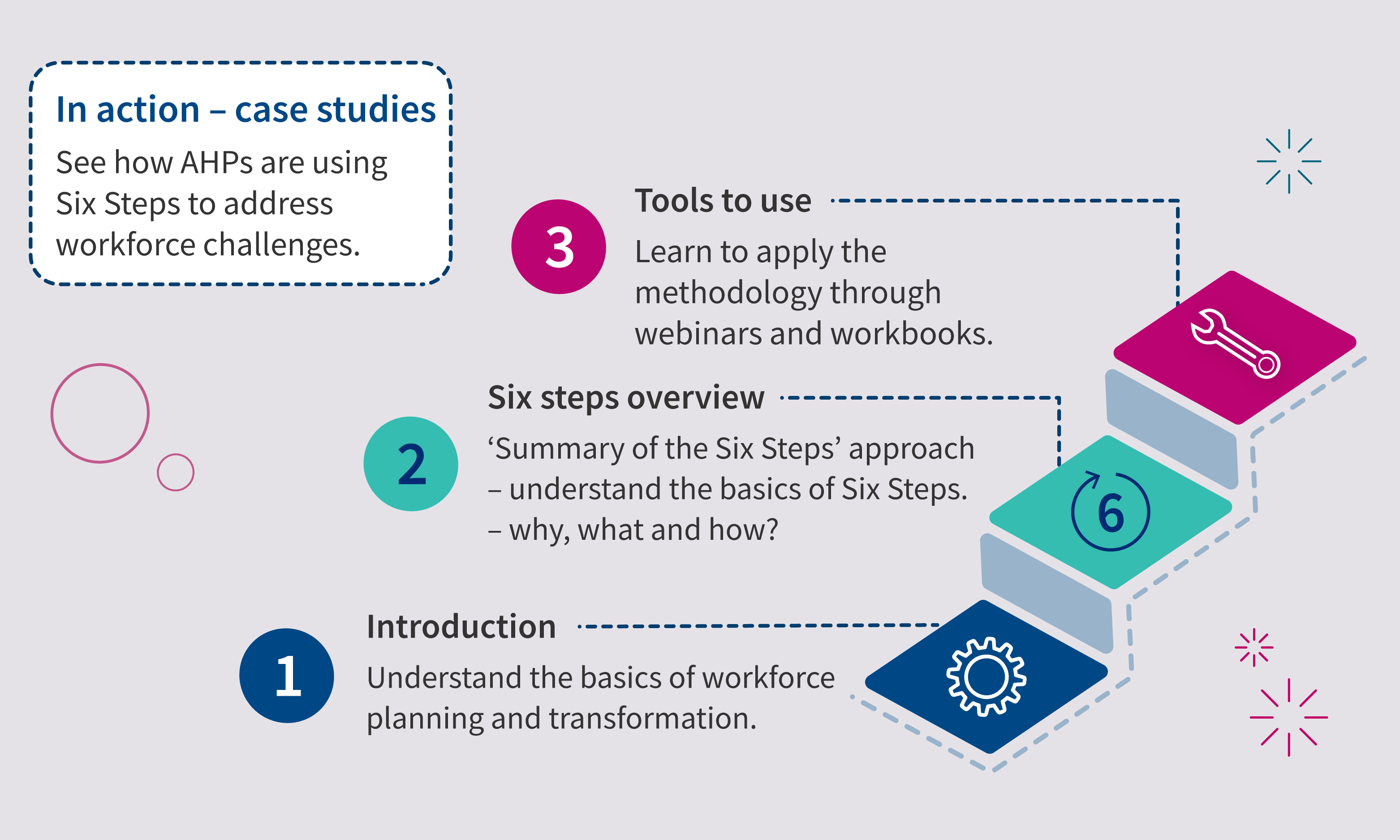
Six Steps® overview

Use this summary of the Six Steps® approach to understand the basics of Six Steps®—why, what and how. Alongside the resources above, this overview will help you decide if you want to go further on the learning journey for Six Steps®.


Start Six Steps® learning journey

Learn to apply the methodology step-by-step through webinars, workbooks and supporting tools, available on the following pages:

How—detailed learner journey to apply Six Steps®

Case studies

These can help you throughout your Six Steps® learning journey. There are 3 case studies:

  • Case study 1 - Getting started with Six Steps® for an orthotics service 
  • Case study 2 - Team level workforce planning and transformation to address a capacity and demand issue for a dietetic team
  • Case study 3 - Service re-design for a regional podiatry service

More information available in the In action: Six Steps® case studies page.