
Introduction and overview

01

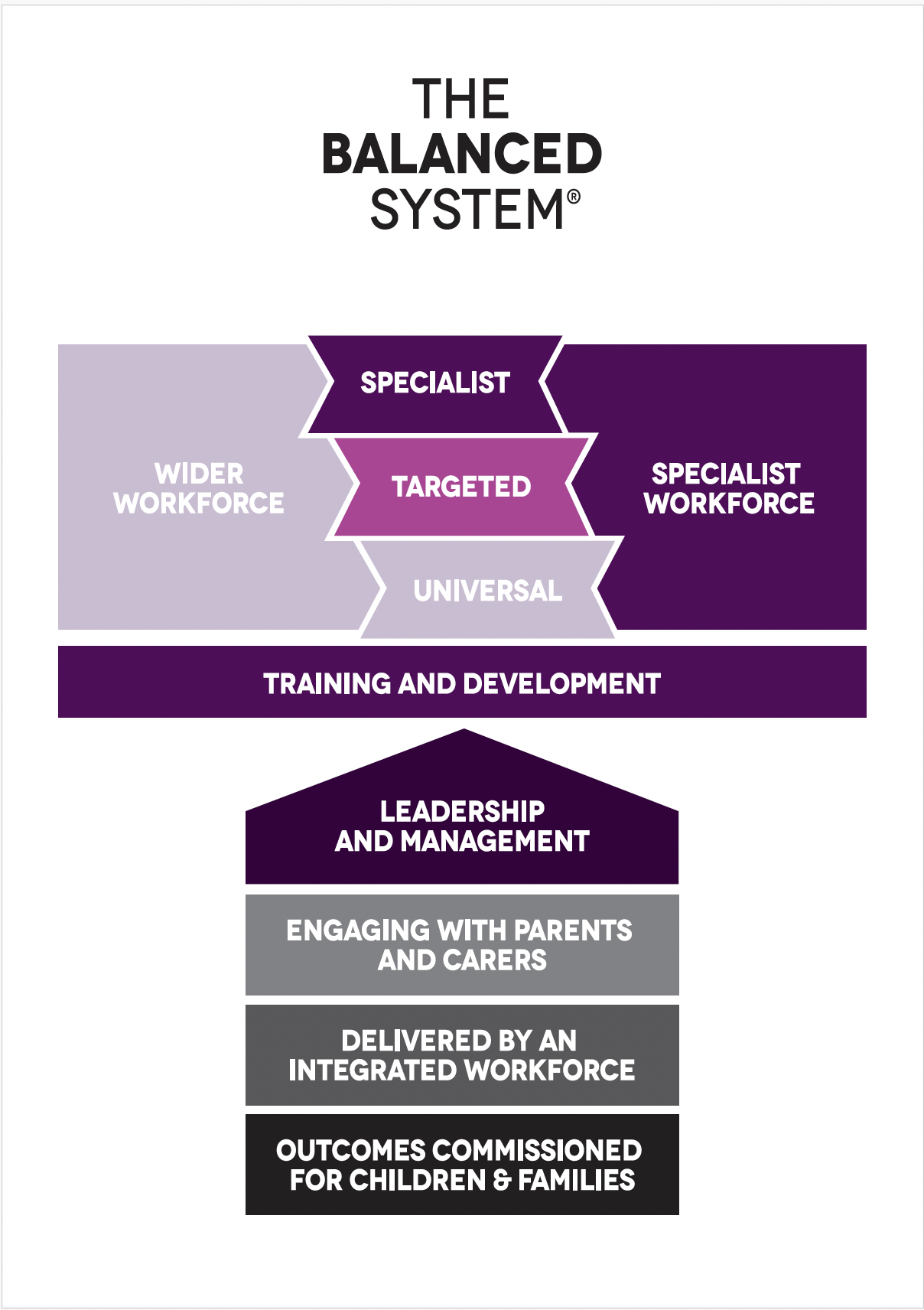
The Balanced System (R) is a framework and suite of tools that improves commissioning and delivery of integrated services, within an integrated whole systems approach. It had a structured approach: understand, plan, do and review phases. What is it : The Balanced System Balanced system® supports:

  • a whole‑systems
  • a Public Health approach - mapping of universal, targeted and specialist offers for the service now and what is needed to allow service users to access universal, targeted and individualised support in a non-linear way
  • data‑driven planning, workforce analysis, and outcome focused measurement through impact
Why

Why is Balanced System® used? and how is it helpful for me?

For radical change in how services are conceptualised, planned and delivered. Balanced System® has been successful in:

  • increasing access
  • reducing waiting times 
  • using workforce to meet need based on data (via workforce - analysis of current staff within the service and what may be required)
  • Mapping of universal, targeted and specialist offers for the service now and what is needed
  • ensuring impact for the people we serve is at the heart of service design
  • increasing job satisfaction for staff
Who?
  • AHPs, who will lead, drive service change or workforce planning and transformation, other healthcare professionals, workforce planners, service leads, managers
  • Has been utilised for children and young people’s services (speech and language, occupational and physical needs provision) and tested for People Living with Dementia and across the age ranges for speech, language and communication needs

How?

Getting started and resources

  • Use the resources and tools, including case studies (see below).
  • Use Balanced System website and resources The Balanced System (R) (see cost section below)
Cost Some free resources on The Balanced System (R) website. Paid for resources and support options via Balanced System® providers
Timeframes and capacity Dependent on scale of change and if all phases of understand, plan, do and review cycle are undertaken. Case studies exemplify timelines - e.g. 18 months to 3 years.


NES and Better Communication (the Balanced System® providers) have jointly developed webinars and resources that introduce the Balanced System® and how this has been applied in Allied Health Professional (AHP) practice.

How to use the Balanced System resources  

To start—go to Introduction to Workforce planning and transformation page of this resource. 

This will help you to:

  • to understand what workforce planning and transformation is, how workforce planning and transformation can support AHP service challenges, and AHP services/teams
  • to help you to decide which workforce planning and transformation approach(es) might best suit you/your team/service, to address the service need or challenge you are facing
  • to help you navigate the content of the workforce planning and methodologies section of this website to help you best use the resources.

Balanced System® overview

Use this summary of the Balanced System® to understand the basics—why, what and how. Alongside the resources above, this overview will help you decide if you want to go further on the learning journey for Balanced System.

For further resources giving more detailed information on Balanced System® including an introductory video, go to the tools and resources section

To start your Balanced System® learning journeywatch the Balanced System workshop video below and review the slides in the Accompanying resources section further down this page. 

Balanced System workshop video

Download video transcript (doc)


This workshop video explores transformational change using the Balanced System outcomes framework. This includes:

  • Overview of the Balanced System®: philosophy, outcomes framework, core delivery principles, and delivery model.
  • Real-world application: How AHPs and system partners—including SLTs, OTs, PTs, and education colleagues—have used the framework to influence impact/improve services. Case studies include work with children and young people, and people living with dementia, illustrating how SLTs, OT, PT, and education colleagues have used the Balanced System Framework to understand and transform provision.
  • Reflection and appraisal opportunity: How the Balanced System approach could benefit your own population or practice areas.

Accompanying resources

Balanced System® workshop presentation slides (pdf)